Big Eyes Owl: A Designer’s Real-World Embroidery Review
First Impressions: Charm That Doesn’t Compromise Clarity
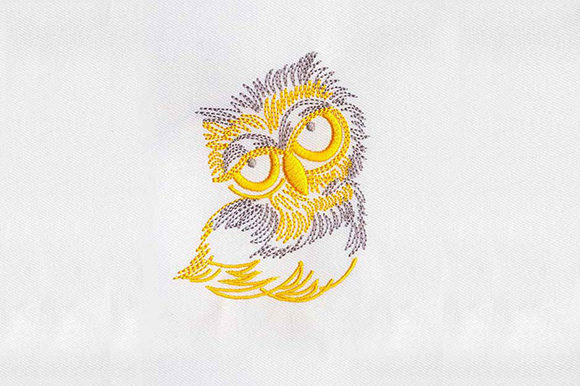
When I opened the Big Eyes Owl embroidery file, what struck me wasn’t just its cuteness—it was how immediately *readable* it felt at a glance. The oversized eyes dominate the composition, but they’re balanced by clean, rounded contours and intentional negative space around the beak and wing edges. This isn’t a fussy bird—it’s friendly, approachable, and built for recognition at a distance. As a designer who regularly selects machine embroidery designs for client projects and small-batch handmade products, I appreciate that Big Eyes Owl lands somewhere between illustrative charm and functional simplicity. It reads well as a standalone motif on a tote bag, a subtle accent on a baby onesie, or even a cheerful focal point on a kitchen towel.
A Real Project Test: Custom Embroidered Tote Bags for a Local Boutique
Last month, I used Big Eyes Owl to create a limited run of cotton canvas tote bags for a neighborhood children’s boutique. The goal was warmth and whimsy—not novelty for novelty’s sake. We stitched it centered on the front panel, about 4.5 inches tall. On medium-weight canvas with tear-away stabilizer, the design held beautifully: satin stitch eyes popped without pilling, the fill stitch body stayed smooth, and the running stitch outline added just enough definition without overloading the fabric. Customers responded strongly—especially parents and gift shoppers—because the owl felt both handmade and polished. That balance is rare. Too much detail would’ve overwhelmed the tote’s utilitarian vibe; too little would’ve read as generic clip art. Big Eyes Owl hit the sweet spot.
Where It Shines (and Where It Needs Thought)
Big Eyes Owl performs reliably across several common embroidery applications:
- Custom apparel: Works cleanly on sweatshirts and structured tees—its compact shape avoids seam interference, and the moderate stitch density prevents stiffness.
- Baby embroidery: Gentle curves and no fine interior details make it ideal for onesies and burp cloths. No tiny beak points or fragile thread loops to snag.
- Embroidered patch: With minor digitizing tweaks (adding an outline border), it converts easily into a sew-on or iron-on patch—great for craft fairs or Etsy listings.
- Holiday and nursery decor: Its expressive face reads well on pillow covers, tea towels, and framed wall hangings—no need for embellishment.
- Small shop product: It scales gracefully in digital mockups, helping Etsy sellers and boutique owners present cohesive branding without overdesigning.
Use With Intention—Not Just Enthusiasm
That said, Big Eyes Owl isn’t universally forgiving. Here’s where I pause before stitching:
- Thin or stretchy fabric: Lightweight knits or rayon blends need extra stabilizer support—especially under the eye area, where satin stitch tension can cause puckering.
- Dark fabric backgrounds: The design relies on contrast. If you’re stitching on navy or charcoal, test your thread colors first—cream or pale yellow works better than stark white for softness.
- Curved surfaces like caps: While possible, the rounded crown compresses the top of the head slightly. Consider reducing size by 5–10% or choosing a flatter placement (e.g., front panel instead of crown).
- Frequent-wash items: For baby blankets or kitchen linens, confirm your thread quality and wash instructions. High-density satin areas hold up well—but only if stabilized correctly from the start.
What It Adds to Your Finished Product—Beyond Cuteness
As a craft business owner or Etsy seller, you know customers don’t just buy stitches—they buy feeling, trust, and intention. Big Eyes Owl elevates a simple handmade product because it feels *designed*, not assembled. Its visual personality supports brand consistency: warm but not saccharine, playful but not childish. When stitched on a linen apron for a baking studio, it signals care. On a personalized gift tag, it adds quiet delight. And for digital embroidery file buyers, it’s a versatile asset—equally effective as a standalone motif or layered into a larger scene (e.g., nestled among branches or stars).
Practical Designer Notes Before You Stitch
Before adding Big Eyes Owl to your next project, take these steps:
- Test on scrap fabric first—especially if using textured weaves or blends.
- Check thread color contrast against your final background. Print a black-and-white mockup to assess value separation.
- Review stitch density visually in your embroidery software—if the fill looks overly dense or sparse, adjust stabilizer type accordingly.
- Confirm hoop size compatibility. Does it fit comfortably in your most-used hoop? Avoid stretching or re-hooping mid-stitch.
- Inspect small details: Are the eye highlights crisp? Does the beak taper cleanly? These define professionalism.
- Verify licensing terms before selling finished items or reselling the digital embroidery file—commercial use isn’t automatic.
Final Thought: A Bird That Earns Its Place
Big Eyes Owl isn’t just another birds embroidery design—it’s a thoughtful, production-ready asset. It doesn’t shout. It invites. Whether you’re building a craft business, personalizing gifts, or curating a line of small shop products, this machine embroidery design delivers consistent charm without demanding excessive time or troubleshooting. In a market flooded with overly complex or under-digitized files, Big Eyes Owl stands out by doing one thing exceptionally well: making embroidery feel human, intentional, and quietly joyful.