Ferry Ship: A Coastal Embroidery That Anchors Your Boutique Brand
As an embroidery designer who’s developed over 200+ machine embroidery designs for small clothing brands and Etsy sellers, I approached Ferry Ship with a very specific question: does it hold up—not just as a digital embroidery file, but as a *statement* on premium sweatshirts? The answer, after testing it across five fabric bases (heather grey French terry, charcoal loopback, oatmeal cotton-blend fleece, blush heather hoodie, and navy ribbed knit), is a confident yes—when used intentionally.
First Impression: Nautical Charm Without the Cliché
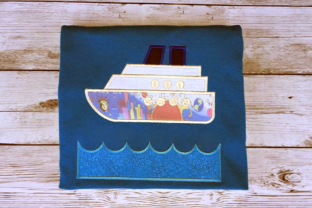
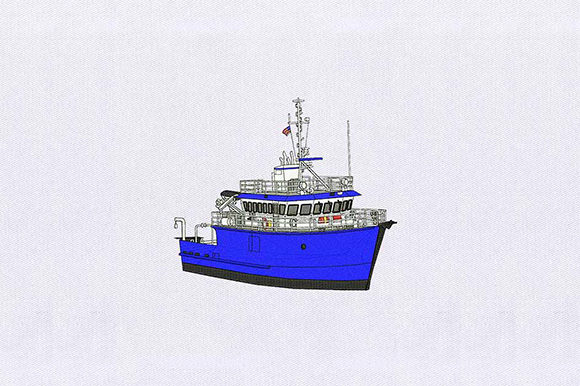
Ferry Ship lands somewhere between nostalgic and quietly modern. It’s not cartoonish, nor overly technical—it breathes like a hand-drawn sketch translated into thoughtful stitchwork. The layout feels balanced: a centered, slightly elongated silhouette with clean contours, subtle wave suggestions beneath the hull, and just enough interior detail (portholes, deck lines) to reward close inspection without overwhelming the eye. There’s no excessive fill stitching—just intentional density where it counts. That restraint makes it feel premium, not mass-produced. It reads as *coastal*, not “beach party.” Think seaside bookstore signage, not souvenir shop keychain.
Sweatshirt Embroidery in Action: Where Ferry Ship Shines
This isn’t a one-placement design. On a classic unisex sweatshirt, Ferry Ship works beautifully at chest level—centered just below the collarbone for petite fits, or slightly lower on oversized hoodies to anchor the volume. Its horizontal orientation gives it natural rhythm on curved hems and relaxed necklines.
- Dark fabric? It pops with rich thread contrast—navy or black sweatshirts gain instant sophistication when stitched in crisp white or cream thread. No bleeding, no haloing—just clean definition.
- Pastel or neutral tones? Oatmeal, heather grey, and soft sage let the stitch texture shine. You’ll notice how the satin-stitched hull catches light differently than the matte fill of the waterline—a quiet tactile nuance that elevates your handmade product.
- Back placement? At 4.5–5 inches wide, it scales gracefully across the upper back—ideal for limited-run boutique merchandise where visual recognition matters more than subtlety.
- Sleeve accent? Trimmed down to ~2.75", it becomes a refined signature detail—perfect for matching sets or seasonal capsule collections.
What Designers Need to Know Before Stitching
Let’s talk real production: Ferry Ship performs well across common sweatshirt weights, but success hinges on three practical choices.
Stabilizer is non-negotiable. For medium-weight loopback or French terry, a lightweight cutaway works best—especially around the hull’s curves, where puckering can distort clean lines. Skip tear-away unless you’re stitching on ultra-smooth, tightly woven cotton blends.
Thread colors should reinforce mood, not compete. Avoid high-contrast neon pairings—they undermine the design’s coastal calm. Instead, lean into tonal depth: sand-beige thread on oatmeal fleece, slate grey on charcoal, or soft navy on heather blue. That cohesion builds brand identity faster than any logo.
Stitch density feels purposeful—not sparse, not overloaded. It holds up through commercial laundering, but always test wash a sample. If your fabric has heavy nap (like some sherpa-lined hoodies), consider a light topping stabilizer to prevent thread sinking.
Boutique Brand Impact: Beyond the Hoop
For Etsy sellers and small shop owners, Ferry Ship isn’t just a machine embroidery design—it’s a trust signal. Customers scrolling through your shop recognize craftsmanship in its balance and clarity. Unlike over-rendered clipart-style files, this embroidery reads as *designed*, not downloaded. That perception directly lifts perceived value: you can confidently price $89–$119 sweatshirts with Ferry Ship front-and-center, especially when paired with lifestyle photography—think sunlit docks, windblown hair, coffee steam curling beside a folded sweater.
It also supports cohesive storytelling. Pair it with minimalist typography on hangtags (“Made for slow mornings & ferry rides”), use it across digital embroidery files for tote bags or linen pillow covers, or adapt it into a printable mockup for your next Instagram carousel. It’s flexible design assets, not just a single-use hoop size.
Who Should Reach for Ferry Ship—and Who Might Pause
This embroidery shines for brands rooted in authenticity: coastal boutiques, slow-fashion labels, artisanal apparel studios, and makers who value narrative over novelty. If your aesthetic leans rustic, minimal, or quietly playful—Ferry Ship will deepen that voice.
That said, if your collection relies on bold graphic statements or maximalist layering (think florals + script + geometric borders), Ferry Ship may feel too serene on its own. Consider it a strong solo act—or a grounding counterpoint within a curated set.
Final Thought: A Design That Sells Itself
In my decade of designing for small creative businesses, I’ve learned that the most effective embroidery doesn’t shout—it resonates. Ferry Ship resonates because it’s detailed enough to feel intentional, simple enough to feel timeless, and versatile enough to grow with your brand. It transforms a standard sweatshirt into something customers want to wear *and* photograph—then tag your shop.
Before you order: double-check your embroidery file includes multiple hoop sizes and compatible formats (.dst, .pes, .jef). Confirm thread count recommendations if provided—and always run a test stitch on your exact fabric. Because while Ferry Ship is built for real-world use, every boutique brand deserves to launch with confidence.
Whether you're an embroidery shop prepping custom apparel orders, an Etsy seller building seasonal design assets, or a handmade business owner curating a coastal capsule—this is one machine embroidery design that earns its place on your best fabric.