Running Woman Embroidery Review
A Sporty Silhouette with Boutique Appeal
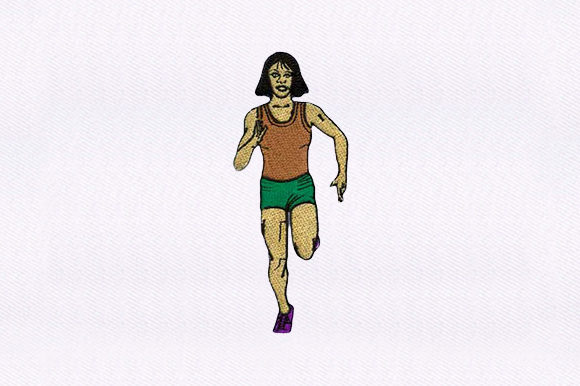
As an embroidery designer who’s developed collections for indie apparel brands and Etsy sellers over the past decade, my first impression of Running Woman was immediate: it’s clean, confident, and quietly expressive. This isn’t a cartoonish or overly stylized figure—it’s a fluid, forward-moving silhouette with intentional line weight and balanced negative space. The posture reads as energetic but grounded, athletic but approachable—ideal for a boutique brand that values authenticity over flash. It leans feminine without being delicate, sporty without feeling corporate, and minimal without sacrificing presence. That balance makes Running Woman unusually versatile across apparel categories.
Sweatshirt Embroidery That Elevates Neutral Basics
For sweatshirt embroidery—especially on heather grey, oatmeal, or soft black French terry—the Running Woman design holds its own without overwhelming. Its moderate stitch density (check the Creative Fabrica embroidery file details before production) means it lies flat on fleece-backed fabric without puckering, and the clean outer contour avoids the “blob” effect common in dense sports motifs. On oversized hoodies, I’d place it centered just below the collarbone—not too high, not too low—for visual harmony with relaxed silhouettes. For chest placement on standard-fit sweatshirts, it reads crisp and intentional at 3.5–4 inches wide. And yes, it works beautifully on ribbed fabric—if you use a medium-weight cutaway stabilizer underneath to support stretch and texture.
Hoodie Design Beyond the Chest
Don’t limit Running Woman to front-center. Try it subtly on the left sleeve cuff of a charcoal hoodie—scaled down to 2.25 inches—to add movement without clutter. Or flip orientation and stitch it vertically along the back seam of a cropped sweatshirt for a modern, editorial touch. Because the design avoids tiny interior details or fragile thread bridges, it holds up well on curved surfaces like hoods and seams where tension shifts during wear.
T-Shirt Embroidery & Denim Jacket Accents
On lightweight cotton tees, Running Woman shines when paired with tonal or near-tonal thread colors—think heather navy thread on indigo denim or soft taupe on ecru jersey. That subtle contrast reinforces handmade quality and supports cohesive branding. For denim jackets, avoid placing it directly over thick pocket seams; instead, opt for the upper back yoke or inside the left chest pocket flap—areas where fabric remains stable and flat during hooping. The design’s open structure allows breathability, so it won’t stiffen the garment like heavier fill-stitch motifs might.
Tote Bags and Lifestyle Merchandise
As a tote bag design, Running Woman lands with quiet confidence. It reads clearly at 5–6 inches wide on natural canvas or heavyweight cotton duck, and its directional energy guides the eye naturally across the surface—perfect for lifestyle product photos and printable mockups. Small shop owners will appreciate how easily it integrates into a broader visual language: pair it with minimalist typography or botanical accents in your Etsy listings, and it becomes part of a curated story—not just decoration.
What Makes Running Woman Work for Commercial Embroidery
This isn’t just another sports-themed machine embroidery design—it’s a strategic asset for small creative businesses. Its visual clarity translates across social media graphics, packaging stickers, and even embroidered hang tags. When customers see Running Woman repeated across your custom apparel line, it builds product recognition and reinforces your brand’s active, mindful ethos. Buyers respond to consistency, and this design delivers it without feeling repetitive—thanks to its inherent motion and adaptable scale.
Practical Designer Notes Before You Stitch
- Test on scrap fabric first—especially if using stretchy knits or brushed fleece. Observe how the outer edge settles and whether any satin stitches pull.
- Confirm stabilizer choice: medium cutaway for knits and fleece; tear-away for stable wovens like denim or canvas.
- Review thread color contrast carefully on dark garments. A matte black thread may disappear on deep charcoal—heavy-duty rayon or polyester often offers better definition.
- Check hoop size and placement options in the Creative Fabrica embroidery file preview. Some versions include alternate orientations or simplified variants—review before digitizing.
- Inspect stitch density visually. If the file includes heavy fill areas, consider reducing density slightly for ultra-soft fabrics prone to distortion.
- Always test on the exact garment fabric you’ll use in production—not just a similar swatch. Ribbing, brushing, and dye lot variations impact final appearance.
- Compare placement options across sample garments: chest, sleeve, back yoke, and hem band all offer distinct brand impressions.
- Verify licensing terms on Creative Fabrica before selling finished apparel. Commercial embroidery rights are essential for Etsy sellers and boutique brands.
Final Thoughts for Handmade Product Creators
Running Woman doesn’t shout—it invites. That’s rare in the Sports category, where many embroidery files default to bold outlines or aggressive shading. Instead, it offers restrained confidence: the kind that fits seamlessly into a seasonal capsule collection, complements slow-fashion messaging, and feels equally at home on a cozy cashmere-blend sweater or a recycled-cotton tote. For the small shop owner balancing craftsmanship and commercial appeal, it’s a smart, scalable choice—not just a motif, but a quiet signature.
Where to Use Running Woman Thoughtfully
Avoid tight curves like elbow joints or waistbands unless you’ve tested extensively. Steer clear of ultra-thin fabrics like voile or slubbed linen without added backing. And while it performs well on dark garments, always preview thread color against your specific base fabric—light greys can shift dramatically under different lighting. With thoughtful execution, Running Woman becomes more than a machine embroidery design: it becomes part of your brand’s visual rhythm, reinforcing trust, intention, and care in every finished product.