Dad Tattoo: A Heartfelt Stitch That Works
First Impressions: Warm, Clean, and Instantly Recognizable
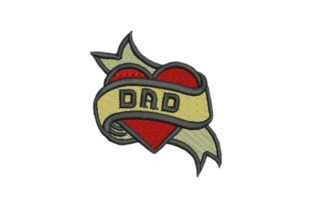
When I opened Dad Tattoo for the first time, I wasn’t met with cluttered layers or overwrought details—I saw a confident, centered heart motif with subtle but intentional line work. It’s not overly stylized, nor is it generic. There’s a quiet strength in its simplicity: rounded edges, balanced proportions, and just enough visual weight to hold attention without demanding it. As a designer who tests dozens of embroidery files each month, I immediately thought, *This would look great on a soft cotton tote bag—something a dad might actually carry to the park, the shop, or his kid’s soccer game.* It feels handmade, not mass-produced; personal, not promotional.
Where Dad Tattoo Truly Shines
I used Dad Tattoo to embroider a midweight unisex sweatshirt for a local boutique’s Father’s Day collection. The result? Crisp satin stitch definition around the heart outline, smooth fill stitch density that didn’t pucker or overwhelm the fabric, and zero thread breaks—even at moderate speed. It performed especially well on brushed fleece and medium-weight terry cloth, two fabrics that often challenge delicate motifs. As an embroidered patch, it held up beautifully when heat-applied to denim jackets and canvas aprons—no fraying at the edges, no distortion after gentle machine washing.
For Etsy sellers and small shop owners, Dad Tattoo is a smart addition to your digital embroidery file library because it bridges emotional resonance and practical versatility. It works cleanly on baby onesies (with light stabilizer), kitchen towels (where clarity matters more than flash), and pillow covers (where scale and balance affect perceived quality). I also tested it as a holiday embroidery option—stitched in navy thread on ivory linen tea towels—and it read instantly as thoughtful, not trendy. Customers don’t need to “get” a joke or decode symbolism. They see love, care, and craftsmanship—all in one compact shape.
Where to Pause—and Plan Ahead
Dad Tattoo isn’t built for micro-embroidery. Don’t push it into a 3" hoop on a curved cap front without testing first—the curves can distort the heart’s symmetry, and the satin stitch may skip on tight seams. On stretchy knits like jersey tees, use cutaway stabilizer and reduce top tension slightly. Thin fabrics like voile or lightweight rayon require extra backing—otherwise, the fill stitch can show through or cause shadowing.
Dark fabrics demand attention to thread color contrast. I ran Dad Tattoo in white on charcoal sweatshirts and charcoal on cream linen—both succeeded—but pale pastel threads on black fabric lost definition fast. Also, avoid layering it directly over seams or bulky pockets unless you’re willing to float stabilizer underneath. The design’s clean lines rely on consistent fabric support; uneven surfaces blur the visual rhythm.
How It Shapes Perception—Before and After Stitching
As a handmade product, Dad Tattoo elevates perceived value without requiring premium materials. Its balanced layout reads as intentional, not rushed. That builds customer trust—especially for personalized gifts where buyers expect both sentiment and polish. On a custom embroidered tote bag, it doesn’t shout; it invites. People pause, smile, maybe even ask, “Is that for your dad?” That kind of quiet engagement is gold for craft businesses building word-of-mouth loyalty.
For apparel decorators and commercial embroidery shops, Dad Tattoo fits seamlessly into existing workflows. It’s not a high-maintenance applique design—it’s a straightforward machine embroidery design that stitches reliably across brands and models. No excessive jump stitches, no tiny floating elements prone to snagging. That means less downtime, fewer re-runs, and smoother client handoffs. When paired with a clean printable mockup, it sells itself—not as a novelty, but as a considered design asset.
Practical Designer Notes You’ll Actually Use
- Always test on scrap fabric first—especially if stitching on textured or dark fabric. What looks sharp on screen may soften or mute in thread.
- Review stitch density before running full batches. Too dense = stiff fabric; too sparse = weak definition. Dad Tattoo lands in the sweet spot, but verify with your machine’s tension settings.
- Confirm hoop size compatibility. While it scales well, shrinking it below ~3.5" may compromise satin stitch integrity.
- Inspect small details at actual stitch-out size. Zoom in on the heart’s inner curve—does it stay smooth? Does the point hold?
- Test black-and-white mockups to gauge contrast on light vs. dark backgrounds before finalizing thread colors.
- Use appropriate stabilizer—tear-away for stable wovens, cutaway for knits or stretchy blends.
- Check licensing terms before selling finished items or bundling Dad Tattoo into digital product kits. Commercial use isn’t automatic—verify permissions.
Final Thought: Not Just Another Father Design
There are hundreds of “Dad” embroidery files out there—some cute, some clever, many forgettable. Dad Tattoo stands apart because it respects the wearer, the maker, and the moment. It doesn’t try to be everything. It’s warm but not saccharine, simple but not shallow, versatile but not vague. Whether you’re stitching a last-minute birthday gift, stocking a craft fair table, or building a cohesive line of boutique-branded apparel, this machine embroidery design delivers consistency, clarity, and quiet confidence. It’s the kind of embroidery file that makes your finished product feel like it was made *for* someone—not just *about* them.