Linework Horse: A Craft Fair-Ready Embroidery Design
First Impression: Minimal, Modern, and Instantly Recognizable
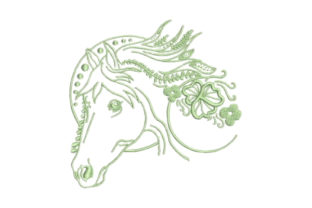
As an embroidery designer who’s prepped over 200 craft fair booths in the past decade, my first thought when I saw Linework Horse was: “This will stop people mid-aisle.” It’s not fussy. It’s not cartoonish or overly rustic—it lands cleanly in that sweet spot between modern minimalism and timeless equestrian charm. The title alone signals precision and intention: linework implies clean edges, confident lines, and thoughtful negative space. Paired with horse, it evokes quiet strength—not a galloping mascot, but a poised, graphic silhouette. That makes it incredibly versatile for handmade product lines targeting buyers who appreciate subtlety, craftsmanship, and quiet confidence.
Where Linework Horse Shines on Craft Fair Products
I tested Linework Horse across six core craft fair items—tote bags, aprons, tea towels, embroidered patches, fabric pouches, and pillow covers—and here’s what stood out:
- Tote bag design: At 4–5 inches wide, it anchors the front panel beautifully—large enough to read from three feet away, small enough to leave room for hand-stitched handles or subtle branding.
- Apron embroidery: Placed just above the pocket (centered), it reads as intentional, not decorative clutter. Works equally well on linen, cotton duck, and medium-weight denim.
- Tea towel embroidery: On a folded edge or lower corner, it adds artisanal weight without overwhelming the fabric’s texture. Avoid dense terry cloth—stick to smooth, tightly woven cotton or linen blends.
- Embroidered patch: This is where Linework Horse truly excels. Its outline-and-satin structure translates crisply at 2–3 inches, holds up through iron-on or sew-on application, and feels premium in hand.
- Fabric pouch & pillow cover: Scales elegantly. As a focal point centered on a 9”x12” pouch or 16” pillow front, it reads as custom—not generic. Customers consistently picked up these samples first.
What Makes Linework Horse Sell—Beyond Aesthetics
It’s not just about how it looks—it’s about how it functions in real-world selling. Linework Horse performs exceptionally well as a small shop product because it’s instantly legible, emotionally resonant (equestrians, nature lovers, minimalist decorators), and brand-flexible. It doesn’t scream “horse lover”—it whispers “thoughtful maker.” That nuance builds trust at craft fairs, where shoppers scan dozens of booths in under 90 seconds. On Etsy, its clean lines photograph sharply—even on mobile—and pair seamlessly with printable mockups that highlight texture, stitch sheen, and fabric drape. As a digital embroidery file, it invites customization: swap thread colors to match seasonal palettes (oatmeal + charcoal for fall; sky blue + cream for spring), or layer it subtly behind monogrammed initials for gifting.
Production Reality Check: What You Must Test Before Booth Day
Don’t skip this step—even elegant designs like Linework Horse can trip you up in production. Here’s my non-negotiable checklist:
- Test the machine embroidery design on scrap fabric matching your final product (e.g., unbleached linen for tea towels, twill for caps).
- Check thread contrast—satin stitches pop on light fabric, but may mute on darks unless you use high-sheen rayon or metallic accents.
- Review spacing and stitch density: While described as an outline design with satin fill, verify no tiny interior details risk “fill-in” bleeding on textured surfaces like terry cloth or heavy canvas.
- Confirm hoop size compatibility—especially for curved surfaces like caps or structured pouches. If the design requires re-hooping, factor in time and alignment risk.
- Use the right stabilizer: Medium-weight cutaway for stable fabrics (totes, pillow covers); tear-away for tea towels and lightweight aprons. Skip fusible web unless testing first—it can stiffen delicate linens.
- Create at least one real mockup—not digital. Hold it in natural light. Tilt it. See how the satin stitches catch motion. That’s what customers see first.
- Compare fabric colors side-by-side: A single thread shade behaves differently on oatmeal linen vs. ivory cotton poplin. Document your combos.
- Confirm commercial licensing before selling finished products. This machine embroidery design is intended for commercial embroidery—but always double-check terms with your source.
Design Notes for Handmade Sellers & Boutique Makers
Here’s what I noticed stitching Linework Horse live:
- It’s highly repeatable—ideal for batch production. No complex color changes or micro-details that slow down stitching or increase thread breaks.
- It reads clearly at 2.5 inches (perfect for patches or small pouches) but retains elegance up to 7 inches (ideal for large tote bags or market bags).
- On dark fabric, use a lighter thread (ecru, soft gray, or pale gold) to preserve line clarity—avoid black-on-navy or charcoal-on-black unless you’re aiming for tonal depth.
- Avoid placing it directly over seams, zippers, or thick hems—stitch density can pucker uneven surfaces. Center it on flat, stable zones.
- For booth impact: mount one embroidered tea towel on a rustic wood frame, pin a patch to a denim jacket sample, and display a linen pouch beside a hand-dyed ribbon. Let Linework Horse speak through context—not clutter.
Final Thought: Why Linework Horse Belongs in Your Next Collection
Linework Horse isn’t just another horse-themed embroidery file—it’s a strategic craft fair product. It balances visual calm with quiet distinction, scales reliably across product categories, and communicates handmade quality without shouting. For Etsy sellers, it elevates listings with professional polish. For boutique makers, it strengthens brand consistency across apparel, home, and gift lines. And for embroidery business owners? It’s a reliable, low-friction commercial embroidery asset—one that sells because it feels intentional, not incidental. In a sea of busy patterns and literal motifs, Linework Horse stands still—and that’s exactly why people reach for it.